


Most Indianapolis homeowners blast the driveway with a pressure washer once a year and call it clean — and a lot of them are quietly etching the surface, driving stains deeper, or stripping a sealer they paid good money for.
Done right, concrete cleaning in Indianapolis is straightforward, and it's the single most important step before sealing — a sealer can't bond through dirt, oil, or algae. This guide covers how to clean a concrete driveway or patio without wrecking it, how to beat the specific stains Indiana weather throws at your concrete, and when it's worth calling a pro. If you'd rather skip the weekend project, our concrete maintenance & care crew handles cleaning and sealing in one visit.
A dirty driveway isn't just an eyesore. The grime sitting on Indianapolis concrete is actively shortening its life, especially through our freeze-thaw winters.
Think of cleaning as step one of protection, not a separate cosmetic chore.
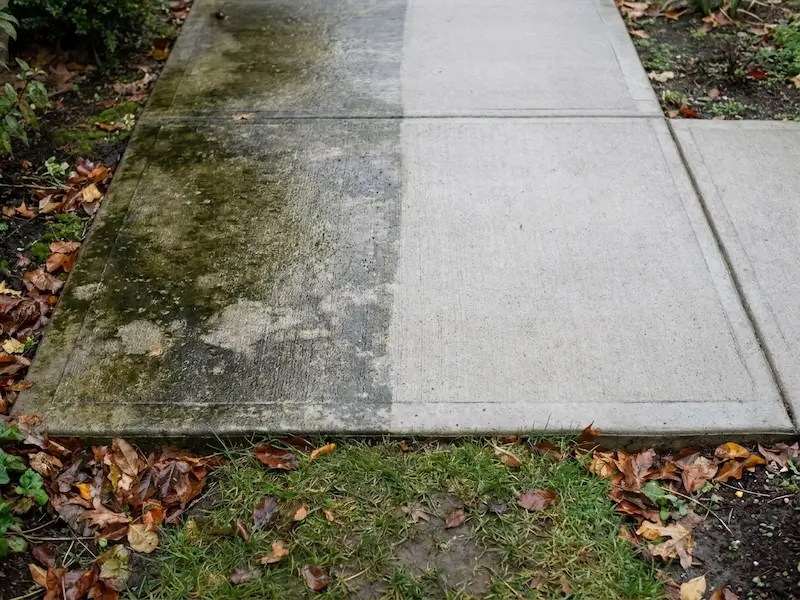
For routine cleaning, you don't need anything exotic. Here's the order that actually works:
Yes, pressure washing can damage concrete — but it's almost always a technique problem, not the machine. A few rules keep you safe:
For decorative, stamped, or already-sealed concrete, soft washing (low pressure plus the right cleaner) is the safer default — high pressure can strip a film-forming decorative sealer right off.
We'll clean it right and protect it in one visit — no rental washer, no guesswork. Free on-site estimate across Indianapolis and Central Indiana.
Get a Free Quote →Different stains need different chemistry. Matching the treatment to the stain saves you a lot of scrubbing:
Always spot-test any cleaner in an inconspicuous corner first, especially on stained or decorative concrete.
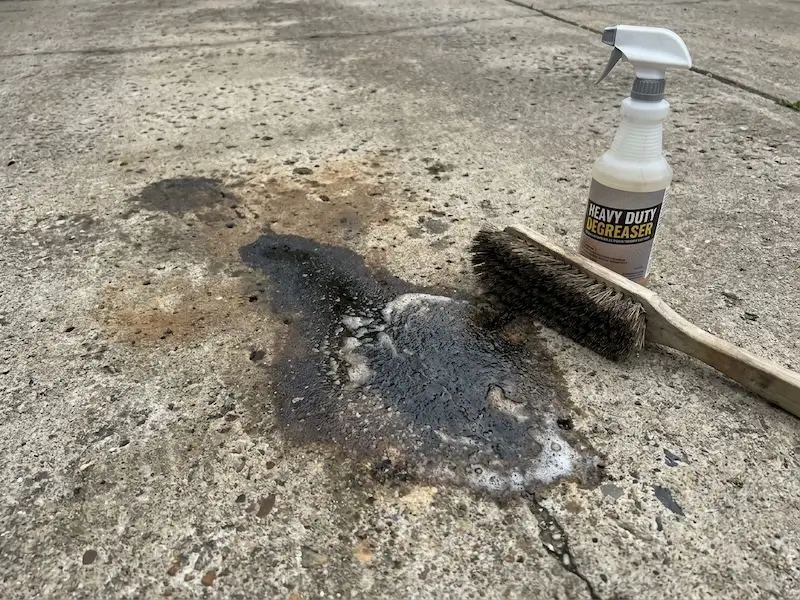
Here's the part most cleaning guides leave out: a clean driveway is a temporary win. Bare concrete is porous, so it starts soaking up oil, water, and salt again the moment it's exposed. Cleaning removes the problem; sealing keeps it out.
Not sure whether your concrete is still protected? Use the absorption test: pour a cup of water on a clean section. If it soaks in and darkens the concrete within a minute or two, the surface is unsealed and drinking up everything that lands on it — it's ready to be sealed. (Note: a quality penetrating sealer doesn't make water bead up like a wax, so don't rely on the “beading” test — watch whether the concrete darkens.)
Once it's clean and dry, our penetrating concrete sealer bonds inside the slab rather than sitting on top as a film, so there's nothing to peel or flake. It's backed by a 25-year product guarantee — meaning the cleaning you just did is the last time you'll be fighting that grime for a long while.
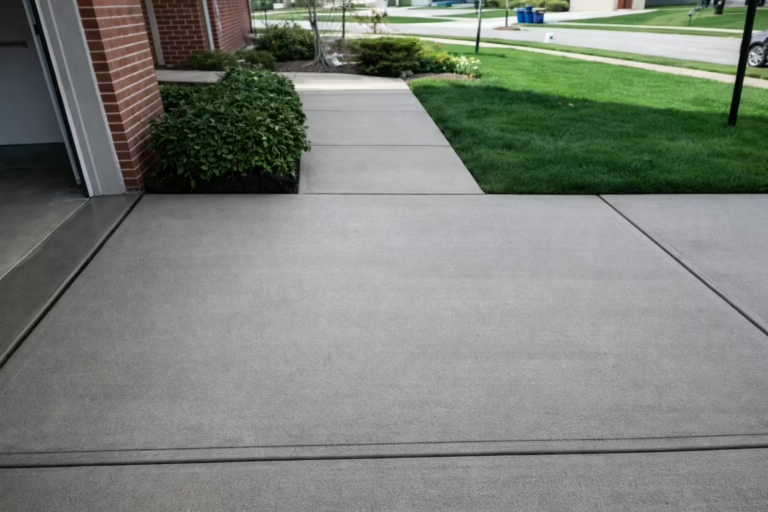
DIY cleaning is fine for light maintenance. It's worth calling in a crew when:
Because cleaning is almost always paired with sealing, we quote it as part of the full project rather than a standalone wash. Seal Now projects start at $1,200, and pricing scales with square footage and surface condition — you can see the full breakdown in our Indianapolis concrete sealing cost guide. We serve Indianapolis and 60+ Central Indiana cities with no travel fees.
Always. Sealer needs direct contact with clean, dry concrete to bond properly. If you seal over dirt, oil, or algae, you trap that grime in and the sealer won't perform — or last. Cleaning is the first step of every sealing job we do.
It can, but usually because of technique, not the machine. Stay in the 2,000–3,000 PSI range, use a wide 25–40 degree fan tip (never a zero-degree tip), keep the nozzle 8–12 inches off the surface, and keep it moving. Lingering in one spot or using a pinpoint stream is what etches and lines concrete.
Sweep it, pre-treat oil and organic stains, apply a concrete-safe degreaser and let it dwell, then wash and rinse thoroughly. Let the chemistry do the work so you can use lower pressure. For shaded or north-facing surfaces with mold and algae — common here — a bleach-based outdoor cleaner works best.
For fresh spills, cover with cat litter or baking soda to absorb the surface oil, then scrub with a concrete degreaser. Set-in stains often need a poultice — a paste that draws the oil back up as it dries. Repeat as needed; deep oil rarely lifts in one pass.
Yes — that's how most of our projects run. We clean and prep the surface, let it dry, then apply the sealer once conditions are right. It's part of our concrete maintenance and care service, so you get a properly prepped, sealed surface without renting equipment or coordinating two jobs.
Because cleaning is the prep step for sealing, we quote it as part of the overall project rather than on its own. Seal Now projects start at $1,200 and scale with square footage and surface condition. See our concrete sealing cost guide for full ranges, or request a free on-site estimate.
Clean concrete the right way — match the cleaner to the stain, keep your pressure in check, and rinse well — and you protect the surface instead of damaging it. But cleaning alone is a short-term fix; bare concrete starts collecting grime again immediately. The lasting move is to clean, then seal.
Related reading:
Free on-site estimates, same-week scheduling, and a 25-year product guarantee on every penetrating sealing job. We clean it right and seal it for good — across Indianapolis and Central Indiana.