




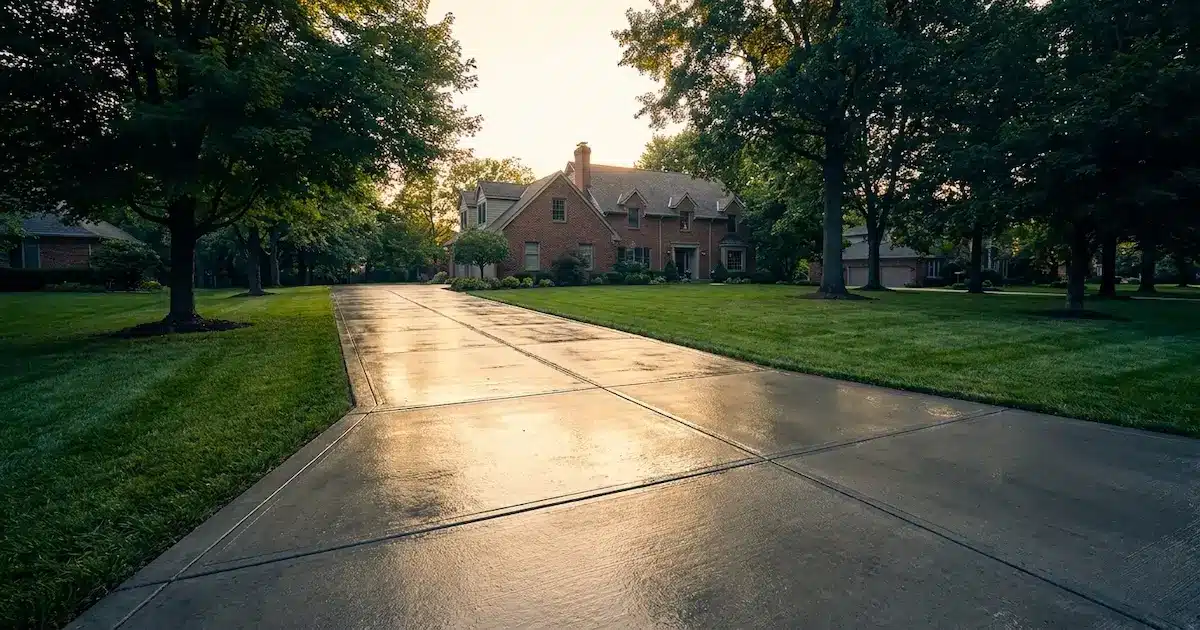
It depends entirely on the type of sealer. Acrylic and "big box store" sealers last 1–3 years before they peel. Silane-siloxane sealers last 5–10 years. Penetrating silicate sealers — the type Seal Now uses on concrete and wood — last for the life of the surface. They don't sit on top of the concrete; they chemically bond inside the pores and become part of the slab itself. That's why our penetrating sealers are backed by a 25-year product guarantee — the longest in the industry.
If you've ever stood in the sealer aisle at a home improvement store, you already know the problem: every bottle promises "long-lasting protection," nobody defines what that means, and the only number on the label is the can size. So when a salesman tells you sealed concrete lasts "5 to 10 years," that answer is technically true — and also useless, because it ignores the fact that different sealer technologies have completely different lifespans.
This guide is the straight answer from a Central Indiana sealing crew that's been doing this for years. We'll cover what actually controls how long sealed concrete lasts, the difference between the products you'll find online and what a professional crew uses, and why Indianapolis weather is harder on a sealed driveway than almost anywhere else in the country.
By the end of this guide, you'll know:
- How long each type of concrete sealer actually lasts
- Why penetrating silicate sealers last decades while topical sealers fail in 1–3 years
- What Indianapolis weather does to a sealed driveway over 25 years
- How to tell when (or if) your sealed concrete needs another coat
- What questions to ask before hiring a sealing company
The Lifespan of Sealed Concrete by Sealer Type
This is where most online articles go sideways. The phrase "concrete sealer" covers four fundamentally different technologies, and they don't last anywhere near the same amount of time. Here's the honest breakdown — based on independent industry sources, not manufacturer claims:
| Sealer Type | Lifespan | How It Fails |
|---|---|---|
| Acrylic (water-based) | 1–3 years | Peels, flakes, yellows under UV |
| Acrylic (solvent-based) | 2–5 years | Wears off in traffic areas, hot tire pickup |
| Epoxy / Polyurethane | 5–10 years | Cracks, delaminates, yellows outdoors |
| Silane-Siloxane (penetrating) | 5–10 years | Gradually loses water-repellency |
| Penetrating Silicate Sealer (what Seal Now uses) |
Life of the concrete | Doesn't fail — bonds chemically inside the slab |
Notice the gap between the bottom two rows. Both are "penetrating sealers," but they work differently. Silane-siloxane sealers form a hydrophobic barrier inside the pores that gradually loses its water-repellency over 5–10 years. Silicate sealers cause a one-time chemical reaction with the concrete that creates calcium silicate hydrate (C-S-H) crystals inside the pore structure — and once those crystals form, they don't break down. The Concrete Network describes silicate sealers as "reactive chemical sealers" that "generally only wear away if the substrate surface itself wears away, which may be 10 years or longer."
That's the entire competitive moat. If you understand the difference between a film and a chemical reaction, you understand why one option lasts decades and the others don't.
Why Penetrating Silicate Sealers Don't Wear Off
A topical sealer — acrylic, epoxy, polyurethane, anything that "coats" the concrete — sits on the surface as a film. That film is what protects the concrete. UV cracks the film, freeze-thaw cycling lifts the film, road salt eats the film, and within 1–5 years the film is gone. You're back to square one.
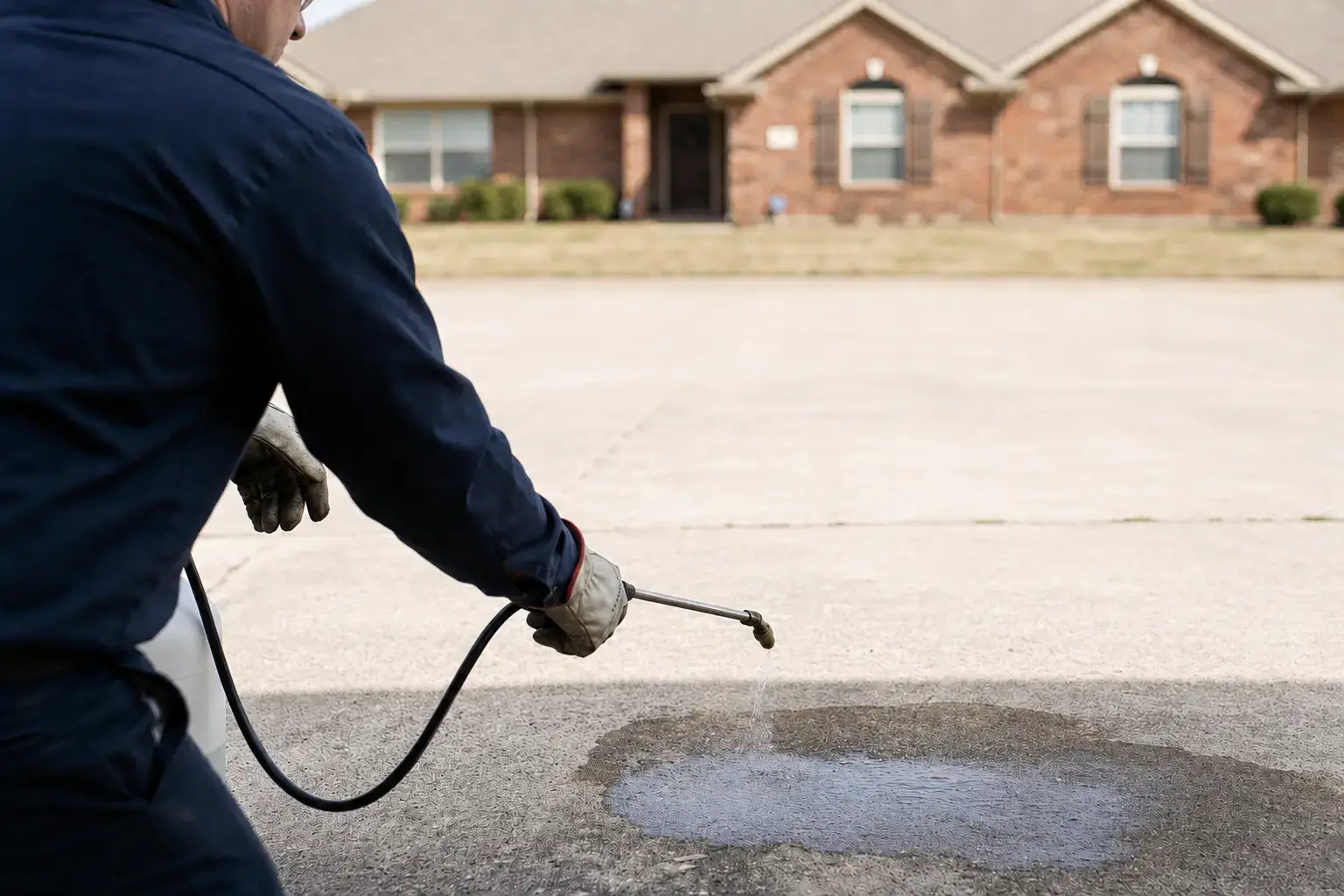
A penetrating silicate sealer doesn't form a film. Here's what actually happens when we apply it:
- Penetration. The silicate solution soaks into the concrete up to 1.5 inches deep, carried by water into the capillary structure.
- Chemical reaction. The silicates react with calcium hydroxide — Ca(OH)₂ — that's naturally present in cured concrete. The byproduct is calcium silicate hydrate (C-S-H), the same mineral the concrete itself is partially made of.
- Crystallization. The C-S-H forms crystals that fill the pores and microcracks where water, salt, and contaminants would normally enter.
- Permanent bond. Once the crystals form, they're insoluble. They don't dissolve in water, don't break down under UV, and don't lift under freeze-thaw stress. The protection is now physically part of the concrete.
There's no film to peel, flake, or wear off — because there's no film at all. That's why penetrating silicate sealers can be backed by a 25-year guarantee while most products in the sealer aisle ship with a 1-year limited warranty.
The 5 Factors That Actually Control Lifespan
Even with the right sealer, real-world lifespan still depends on a handful of factors. Here's what changes the answer — and what doesn't.
Sealer Technology
The single biggest factor. A penetrating silicate lasts decades. A topical acrylic lasts 1–3 years. Same surface, same climate, vastly different outcome.
Surface Prep
Concrete must be clean, dry, and free of oil or old sealer residue. Foundation Armor estimates poor prep can cut sealer effectiveness by up to 50%.
Indianapolis Climate
60+ freeze-thaw cycles per winter and heavy de-icing salt exposure punish topical sealers. Penetrating sealers are immune to both because there's no surface film to attack.
Traffic Load
A driveway with daily vehicle traffic wears any topical sealer faster than a covered patio. Penetrating sealers don't have a wear surface, so traffic doesn't shorten their life.
Number of Coats
Most retail bottles need two coats to be effective. Skipping the second coat is the most common reason DIY sealing fails inside of two winters.
Concrete Age & Condition
New concrete needs 28 days to cure before sealing. Old, deteriorating concrete may need crack repair first — sealing won't reverse damage that's already there.
What Indianapolis Weather Does to a Sealed Driveway
Central Indiana is one of the harshest climates in the country for exterior concrete. Indianapolis homeowners get hit with four punishing forces every year:
- Freeze-thaw cycling. Indianapolis averages 60+ freeze-thaw cycles per winter. Every cycle pulls water in and out of the concrete. If a topical sealer is on the surface, that ice expansion lifts the film and breaks the bond. If the protection lives inside the pores, the freeze-thaw forces have nothing to attack.
- Road salt and de-icers. Chloride ions from road salt are corrosive to concrete and to the rebar inside it. They migrate inward and trigger spalling — those flaky chips that pop off surface concrete every spring. A surface film slows this down for a while, then loses the fight. A penetrating sealer blocks chloride intrusion at the molecular level for the life of the concrete.
- Summer UV. Indiana summer UV indexes hit 9–10. Acrylic film yellows visibly within one season on south-facing driveways. Silicate sealers don't have organic pigments to break down — UV is irrelevant to them.
- Humidity swings. 30% relative humidity in January, 80%+ in July. Surface films expand and contract until they crack and peel. Mineralized concrete pores don't care about humidity.
All four of those failure modes attack a topically-sealed driveway. A penetrating silicate sealer mineralizes the pore structure itself — and none of those forces have a film to break down. That's why we offer the 25-year guarantee with a straight face.
How to Tell If Your Sealed Concrete Needs Re-Sealing
If you have a topical sealer — and that's most homeowners — there are a few telltale signs the film is failing:
- The surface looks dull where it used to be shiny
- You see white, flaky residue lifting off the concrete (the film coming off)
- Water absorbs into the concrete and darkens it instead of beading on the surface
- Color enhancement (the "wet look") has faded
- You can see salt or efflorescence staining that wasn't there last year
For penetrating silicate sealers, the test is different. Topical sealers are designed to bead water on the surface — penetrating sealers aren't. A correctly working silicate sealer will let water absorb into the surface without darkening the concrete underneath, because the pore structure is blocked from below. The right test is the absorption-and-darkening test, not the bead test. Pour a small cup of water on the slab; if it absorbs quickly and the concrete underneath turns visibly darker, the protection is gone. If it absorbs slowly with little color change, the seal is still doing its job.
Cost Over 25 Years: Penetrating vs. Re-Sealing Every Few Years
Here's where the math gets honest. For a typical 600 sq ft Indianapolis driveway:
Topical sealing route
- Initial application: $600–$1,200
- Re-seal every 2–3 years (strip + re-apply): $600–$1,200 each time
- 8–12 re-applications over 25 years
- 25-year total: $5,400–$15,600
Penetrating silicate route
- One-time penetrating sealer application: $2,000–$3,500
- No reapplication required (25-year guarantee)
- 25-year total: $2,000–$3,500
Even at the high end, penetrating sealing costs less than half of the topical route over the life of the driveway — and that's before you count the weekends you spend stripping and re-sealing.
Backed for 25 Years. Not 1.
Our penetrating concrete and wood sealers are backed by a 25-year product guarantee — the longest in the industry. If the protection ever fails inside that window, the product is covered.
Read the GuaranteeWhat About Garage Floors, Decorative Concrete, and Wood?
The 25-year penetrating guarantee applies specifically to penetrating concrete and wood sealers. Other surfaces use different products with different lifespans:
- Garage floor coatings. We install polyurea/polyaspartic systems — about 20x stronger than epoxy, cured in under 24 hours. These are surface coatings, not penetrating sealers, and they carry their own warranty terms. We'll walk through the specifics at your free estimate.
- Decorative and stamped concrete. Decorative surfaces use acrylic top sealers that enhance color and protect the surface pattern. These are film-forming sealers by design — the wet-look enhancement is the point — and they need refreshing every 1–3 years. Covered under our one-year workmanship warranty for application quality.
- Waterproof sealer (Siloxa-Tek). Our DOT-approved waterproof sealer carries 7–10 years of protection per application, plus a one-year workmanship warranty.
- Wood sealing. Our penetrating wood sealer uses the same silification chemistry as our concrete sealer — it mineralizes the wood fibers from inside. Backed by the same 25-year product guarantee.
Sealed Concrete Lifespan Across Central Indiana
We seal concrete and wood across all of Central Indiana, and the timing data we collect is remarkably consistent across the metro:
Indianapolis
Driveways across Indianapolis see the full punishment cycle — daily traffic, heavy winter salt application, summer UV. Penetrating sealing typically pays for itself within 6–8 years compared to the re-sealing cycle most homeowners are stuck in.
Carmel
Mature Carmel neighborhoods — Cool Creek, West Carmel, Village of WestClay — have driveway stock from the early 2000s that's well past its first re-seal cycle. Strong demand here for permanent sealing because homeowners are tired of the maintenance loop.
Fishers
Geist-area waterfront homes in Fishers get extra UV exposure from open lake reflection plus higher humidity. Penetrating sealing performs especially well here since there's no film to fade off.
Westfield & Noblesville
New construction in Westfield and Noblesville often comes with builder-grade unsealed concrete. Sealing inside the first year — once the 28-day cure window passes — protects the slab before the first winter has a chance to start damaging it.
Zionsville, Greenwood, Avon & Brownsburg
We see the same pattern across the rest of the metro: homeowners who've cycled through 2 or 3 acrylic re-seals are the ones most ready to move to a permanent solution. The math gets obvious after the second strip-and-re-apply job.
Frequently Asked Questions
How long does sealed concrete last in Indiana?
It depends entirely on the sealer used. Acrylic and big-box-store sealers last 1–3 years in Indiana's freeze-thaw climate. Silane-siloxane penetrating sealers last 5–10 years. Penetrating silicate sealers — the type Seal Now uses — last for the life of the concrete because they bond chemically inside the slab and don't form a surface film that can wear off.
Is permanent concrete sealing real, or is it marketing hype?
It's real. Penetrating silicate sealers create calcium silicate hydrate (C-S-H) crystals inside the concrete pores through a one-time chemical reaction. Once those crystals form, they're insoluble — they don't dissolve in water, don't break down under UV, and don't lift under freeze-thaw stress. Independent industry sources, including Concrete Network and Foundation Armor, confirm that silicate sealers "last for the life of the concrete."
How often should I reseal my concrete driveway?
If you have an acrylic or topical sealer: every 1–3 years. If you have a silane-siloxane sealer: every 5–10 years. If you have a penetrating silicate sealer with a 25-year warranty: never — that's the entire point of the product.
How do I know what kind of sealer is on my driveway now?
The fastest test: pour a small cup of water on the surface. If it beads up and sits on top, you have a topical sealer (acrylic, epoxy, polyurethane). If it absorbs slowly without darkening the concrete underneath, you have a working penetrating sealer. If it absorbs quickly and the concrete turns visibly darker, the sealer has failed or there's no sealer at all.
Will a penetrating sealer make my concrete look different?
No. Penetrating silicate sealers dry clear and don't change the color or texture of the concrete. If you want a wet-look or color-enhanced finish, that's a topical acrylic sealer — a different product with a shorter lifespan. We offer both and will walk through the trade-offs at the estimate.
Does the 25-year guarantee cover salt damage and freeze-thaw?
Yes. Our 25-year product guarantee covers the failure of the penetrating sealer itself under normal residential and light commercial use, including exposure to Indiana freeze-thaw cycling and de-icing salts. It applies to penetrating concrete and wood sealers; decorative top sealers, garage floor coatings, and waterproof sealers carry their own separate warranty terms.
Can a penetrating sealer be applied over an existing topical sealer?
No. A penetrating sealer needs direct contact with the concrete to bond. If there's an existing topical sealer in place, it has to be stripped first. We handle stripping as part of the prep on most jobs — homeowners are usually surprised how much old acrylic comes off.
How long does the actual sealing job take?
Most residential driveways are completed in one day — clean, prep, apply. The concrete is typically walkable within a few hours and ready for vehicle traffic the next day. We'll give you the exact timeline at the estimate based on your driveway's size and condition.
Do you serve my area?
We serve 60+ cities across Central Indiana, including Indianapolis, Carmel, Fishers, Westfield, Noblesville, Zionsville, Greenwood, Avon, Brownsburg, and Plainfield. If you're within about 60 miles of Indianapolis, give us a call at (317) 548-2002.